
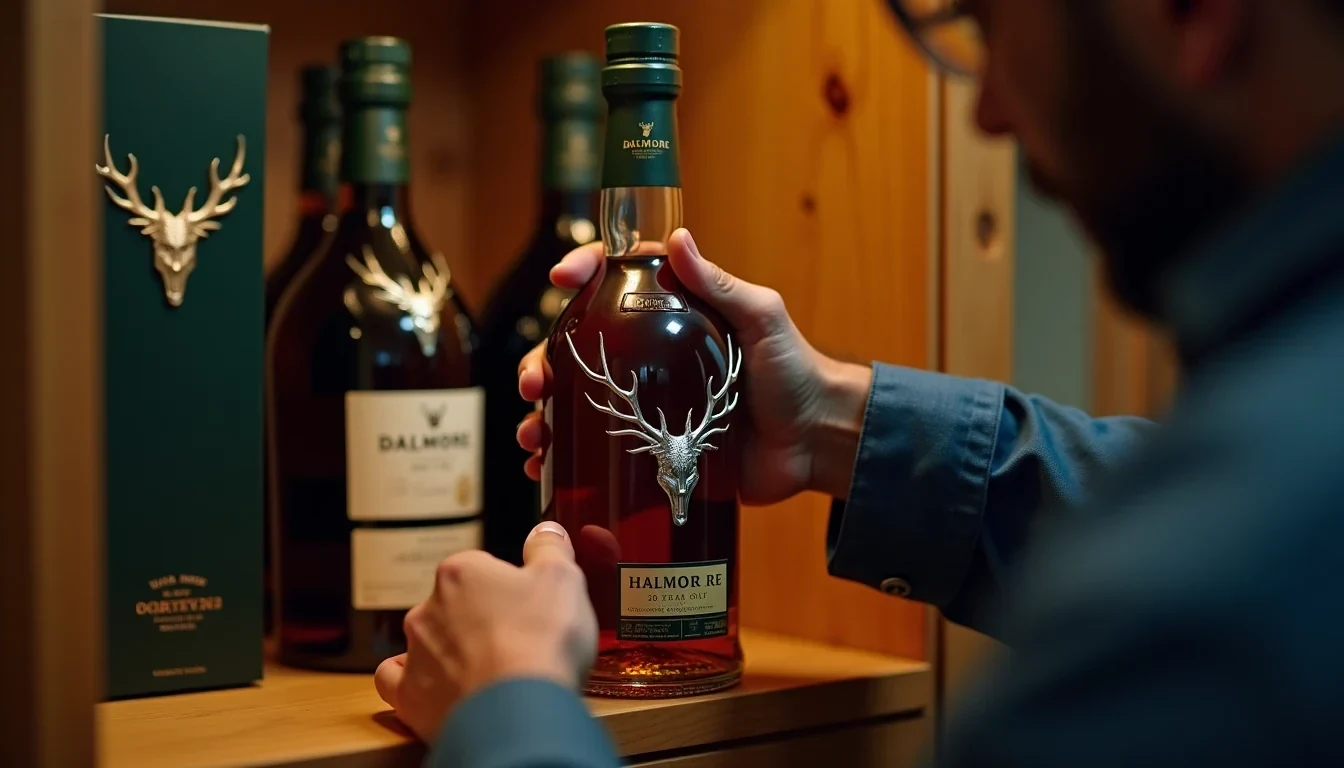
Some bottles arrive in a collection through the front door and straight to the shelf, never once considered for the glass. In South African whisky circles, this is not eccentricity; it is the main event.
The collector’s market here has matured past the assumption that every rare bottle is an investment vehicle parked for resale. A growing cohort buys for the object itself: the finite supply, the intact presentation, the documented chain of custody from distillery to current owner. These are specialist acquisitions where drinkability is beside the point. The liquid inside could be spectacular, but that is almost irrelevant.
What Collectors Actually Chase
Scarcity sits at the foundation. A discontinued age statement, a numbered release with a hard cap, a single cask yielding fewer than three hundred bottles worldwide are not marketing fictions. Once the allocation sells through, no more exists. South African collectors understand this arithmetic intimately.
Condition comes next: fill level, label integrity, capsule seal, cork state. A bottle intended for display must look the part. Provenance matters equally: direct distillery purchase, licensed retailer origin, or auction house with verifiable documentation. Without this chain of trust, authenticity questions linger and value collapses.
Original packaging completes the picture. Presentation box, outer carton, certificates, literature, special stoppers. A Dalmore 25 Year Old in its complete case carries different weight than the identical liquid in anonymous wrapping. The distillery intended a complete object, and collectors honor that intention.
Current Auction Evidence
Pinaroch’s 2026 listings illustrate how these principles operate in practice. Ardbeg Committee Releases appear regularly; these bottles, initially available only to registered committee members, now trade at substantial premiums to their original release pricing. Arran’s Smugglers’ Series volumes, particularly The Illicit Stills and The High Seas, attract sustained bidding for their thematic packaging and limited production runs alongside their narrative conceit.
Aberlour A’bunadh presents a subtler case. The series continues, but specific early batches, roughly Batch 10 through Batch 20, now command collector attention based on perceived profile differences and diminishing availability. Dalmore’s higher age statements and King Alexander III expressions, especially older bottlings or limited decanter editions, feature prominently with opening bids that diverge sharply from ordinary retail channels.
All auction figures require live verification. Values fluctuate with bidding activity, and yesterday’s reserve may not survive tomorrow’s session.
The Price Divergence
The gap between retail and auction pricing for these bottles is structural, not incremental. A limited Ardbeg Committee Release might have left the distillery at R1,500 to R2,500. On the secondary market, depending on specific release and demand concentration, the same bottle can trade between R5,000 and R15,000 or higher. Discontinued expressions from closed distilleries multiply further. Brora 30 Year Old, released years ago at roughly R5,000 to R10,000, now commands R50,000 to R100,000-plus when it surfaces.
This divergence reflects a category shift. Retail pricing assumes consumption. Auction pricing assumes curation. The buyer is not calculating cost-per-dram; they are acquiring a complete artifact with finite existence.
Motivation Beyond the Spreadsheet
Financial return is present in collector calculations, but rarely dominant. The deeper drivers are more specific.
Historical preservation motivates collectors who see themselves as temporary custodians of distillery heritage. A closed distillery bottle, a ghost like Port Ellen or Karuizawa, represents irrecoverable production methods and raw material profiles. Opening it ends that lineage.
Aesthetic appreciation operates independently. Some bottles are simply beautiful objects: heavy crystal, etched labels, architectural packaging. They live in display cabinets as designed, not as compromise.
The intellectual pursuit also matters. Deep knowledge of distillery histories, cask types, batch variations, and release chronologies separates committed collectors from casual purchasers. This expertise is earned through sustained engagement, not purchased.
Then there is the hunt itself. Tracking a specific numbered release across months, verifying provenance through multiple owners, finally securing it through competitive bidding. The acquisition is its own satisfaction.
Completionism drives others: assembling full series, distillery ranges, or era-specific collections. Each new bottle fills a documented gap, visible progress toward a defined goal.
The South African Context
Local collectors operate within specific constraints. Import channels, customs duties, and currency fluctuation affect availability and final cost. Bottles that flow freely through European or American auction houses may appear here sporadically, concentrating demand when they do surface.
The Pinaroch platform and similar local channels have begun regularising this market, providing South African collectors with domestic auction access that previously required international brokerage. This changes the dynamics: more participants, more visibility, but also more competition for the same finite bottles.
For readers considering entry, the same principles apply. Verify provenance personally where possible. Document condition with photographs before accepting delivery. Store upright, away from direct light, at stable temperature. Retain all packaging, literature, and certificates. These practices preserve optionality, whether the eventual disposition is sale, trade, or continued custody.
The bottle that never opens is not wasted. It is simply serving a different purpose than the one printed on the label.









Join the conversation