
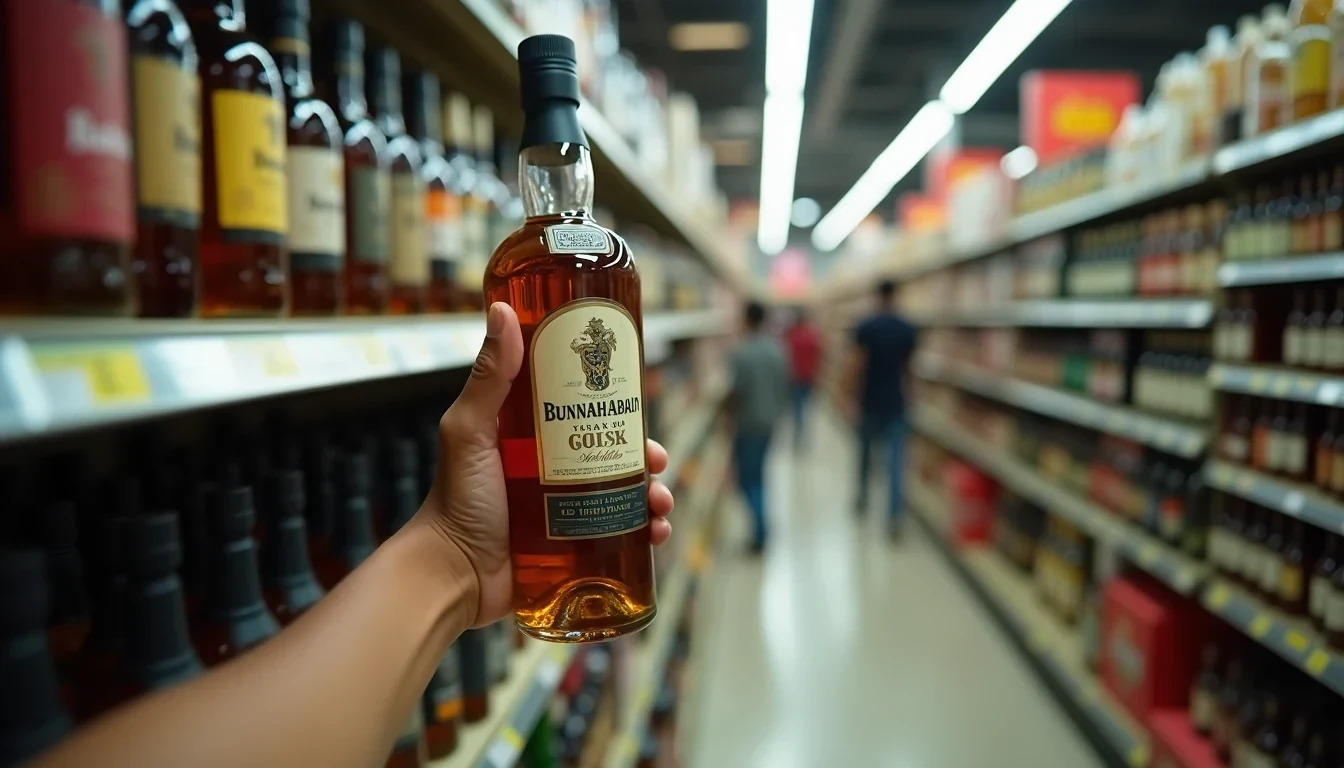
Some bottles never leave the shelf. Johnnie Walker Black Label sits in every Checkers LiquorShop from Durbanville to Nelspruit, priced within a few rand of the competition, always there when you need it. The Bunnahabhain 12 Year Old Cask Strength arrives once a year in quantities so small that WhatsApp groups light up for six hours and the bottle is gone before most drinkers know it landed. This difference is not just popularity; it is a system of container logistics, importer leverage, and retail buying power that determines what you can actually buy in South Africa and what becomes a ghost.
Why Some Bottles Stay and Others Vanish
A distillery’s production volume sets the outer limit of what is possible. Diageo fills millions of cases of Johnnie Walker annually. This scale guarantees regular container shipments to Durban, predictable customs clearance, and enough stock in national warehouses that a single retailer’s stock-out barely registers. An independent bottler like Signatory Vintage or a single-cask release from a craft Islay distillery cannot say the same. Their entire annual output might fit in one corner of a 20-foot container.
Shipping costs from Scotland to Durban have swung wildly in recent years, and these fluctuations hit small releases hardest. A pallet of limited-edition whisky carries the same port fees and handling charges per container as a pallet of mass-market blend, but these costs are spread across far fewer bottles. South Africa’s ad valorem excise duties, VAT, and customs charges can push the landed cost of imported spirits past thirty percent above the ex-distillery price. Many niche whiskies become economically unviable for local importers as a result. The bottle that costs £45 in Glasgow needs to sell for a price that few South African retailers can justify ordering in the first place.
Brand allocation strategy compounds the problem. Major markets and duty-free channels receive priority for limited releases. South Africa, despite its enthusiastic whisky community, sits further down the list. When Ardbeg prepares a Committee Release, the allocation for this country is measured in cases, not pallets. Macallan’s Harmony Collection follows the same pattern, with local quantities disappearing into collector hands within days of arrival.
The Importers and Retailers Who Control the Flow
Multinational drinks groups operate their own local distribution arms. Diageo South Africa moves Johnnie Walker, Talisker, and Lagavulin through established channels with dedicated warehouse space and sales teams. Pernod Ricard South Africa does the same for Jameson, Chivas Regal, and The Glenlivet. These structures are built for consistency, not scarcity. Container schedules are planned quarters in advance, and stock-outs of core ranges are treated as operational failures.
Limited releases travel a different path. Specialist importers like WhiskyBrother&Co. often consolidate orders from multiple producers into single shipments to manage freight costs. A container might carry Gordon & MacPhail bottlings, a few casks from a small Speyside distillery, and some independent Irish releases. All arrive on a timeline dictated by when the last pallet was ready to fill the space. These importers rely on direct relationships with overseas producers, sometimes built over years. Their ability to secure specific bottles depends on reputation and prompt payment more than volume commitments.
Retailer scale then filters what reaches the consumer. Makro, as part of Massmart, purchases whisky in quantities that let it negotiate preferential terms and exclusive distribution rights for certain expressions. Checkers LiquorShop’s national footprint ensures centralised buying power and consistent shelf presence for core ranges. Norman Goodfellows occupies a middle ground, combining broad mainstream selection with curated premium stock. Its allocations reflect strong importer relationships and a customer base willing to pay for rarity.
Smaller independent stores work the edges. They might secure a bottle or two of something unavailable elsewhere, but they cannot compete on price for standard expressions or guarantee depth of inventory. Their value lies in access to the genuinely scarce, not in reliability for the everyday.
How to Tell If a Bottle Is Gone or Just Hiding
The frustration of searching for a specific whisky is worse when you do not know if the hunt is local or national. A systematic check separates the two. Start with the websites of major retailers: Makro, Checkers LiquorShop, Norman Goodfellows, and online specialists like WhiskyBrother&Co. If the same expression shows “out of stock” or “unavailable” across all of them, national scarcity is the likely explanation. If it appears at one but not another, the issue is branch-level distribution or timing.
Calling specific store branches adds clarity. A bottle listed as unavailable online might sit on the shelf at Makro Centurion while Makro Cape Gate sold through its allocation. Liquor managers at individual branches often know their incoming stock schedules and can say whether a re-order is planned.
For definitive answers, contact the official South African importer. Diageo South Africa, Pernod Ricard South Africa, and Beam Suntory SA can confirm whether an expression remains in their portfolio or has been discontinued. This is particularly useful for older releases where secondary market speculation clouds the picture.
Online communities provide real-time intelligence. South African whisky groups on Facebook and dedicated forums track sightings and share stock alerts with a speed that official channels rarely match. A post from a member who spotted the Ardbeg Committee Release at a specialist retailer in Johannesburg can reach hundreds of collectors before the bottle sells out.
Current Examples on South African Shelves
The contrast plays out in real time across the market. Johnnie Walker Black Label, Jameson Irish Whiskey, and Glenfiddich 12 Year Old remain fixtures. Check any of the major retailers and they are in stock, priced competitively, with no urgency to purchase. These are the whiskies of stable supply chains and massive production runs.
Against this, the Bunnahabhain 12 Year Old Cask Strength arrives as an annual event. Norman Goodfellows or WhiskyBrother&Co. might list it briefly upon release, then mark it sold out for the remainder of the year. The Macallan Harmony Collection follows a similar pattern; its limited quantities and collector appeal ensure near-instant disappearance. Ardbeg Committee Releases barely touch local shelves before vanishing into private collections.
Strategies for Tracking the Elusive
Securing these vanishing bottles demands more than casual browsing. Build relationships with staff at specialist retailers. A liquor manager who knows your interests will alert you when an allocation is incoming, sometimes before it is publicly listed. Pre-ordering, where offered, removes the uncertainty entirely.
Join dedicated communities and participate actively. Members who contribute sightings and information tend to receive it in return. The collector who posts about a rare find at a Johannesburg bottle store is more likely to get a heads-up when something similar appears in Cape Town.
Monitor brand channels directly. Distillery newsletters and official social media accounts announce release dates and allocation details with enough lead time for the prepared buyer to act. The unprepared buyer learns about the release when it is already sold out.
Speed matters for the genuinely limited. Have payment details saved, know your preferred retailer’s checkout process, and be ready to purchase within minutes of a stock alert. The Bunnahabhain Cask Strength does not wait for deliberation.
Some bottles will always remain out of reach. Understanding why they vanish, and which part of the system controls their appearance, at least turns a frustrating mystery into a hunt with rules.








Join the conversation