
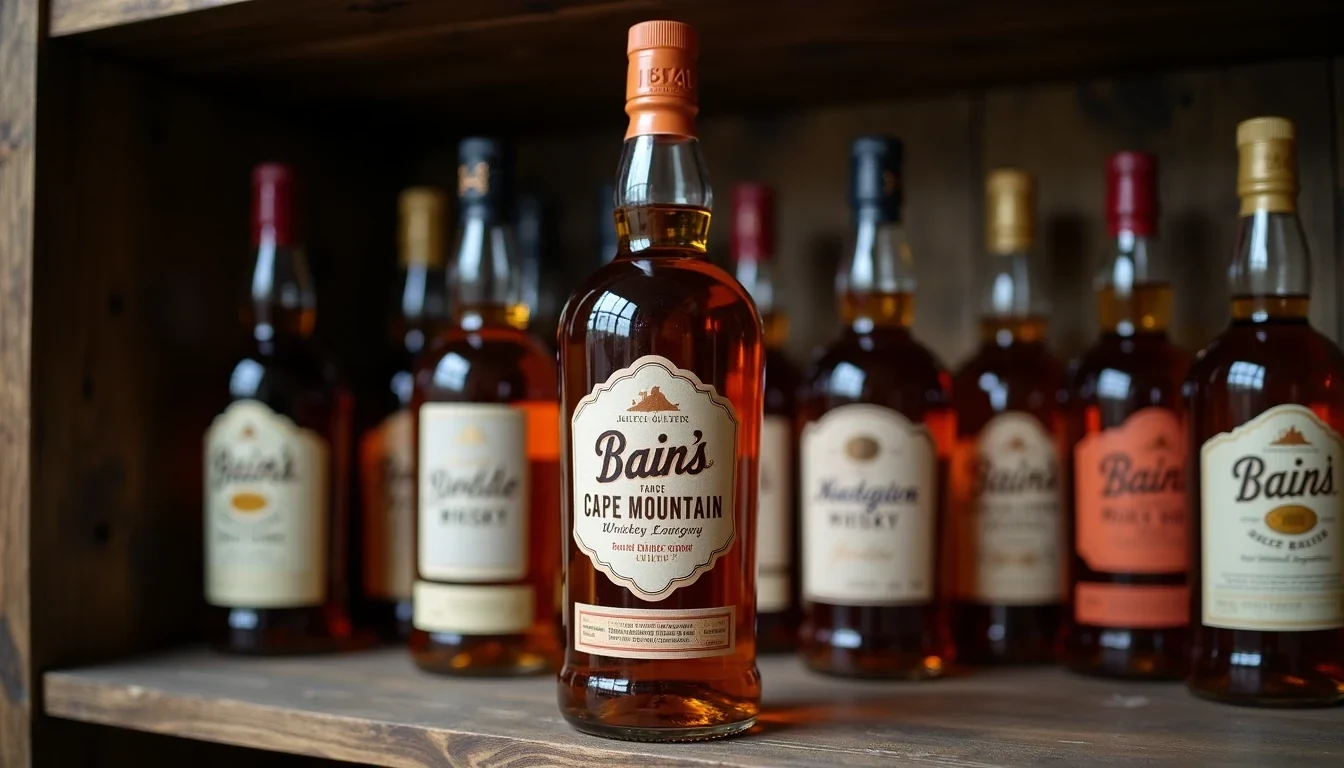
A bottle of Bain’s Cape Mountain Whisky on a shelf between Islay peat bombs and Kentucky bourbons looks almost out of place. It has no smoke or rye spice, and no age statement beyond the modest five years printed on the label. Yet this Wellington-made single grain has beaten Scotch at its own game, taking World’s Best Grain Whisky at the World Whiskies Awards with a recipe built entirely on yellow maize and Cape Mountain water. For South African drinkers, the win is less interesting than the spirit itself: a drink that tastes like nowhere else because it is made from nowhere else.
What Bain’s Actually Is
Bain’s is the only single grain whisky produced in South Africa, distilled at the James Sedgwick Distillery in Wellington, Western Cape. The distillery dates to 1886, though it spent most of its history on brandy and blended whisky before Master Distiller Andy Watts pushed for something distinct. The result, launched in 2009, was a whisky made from 100% South African yellow maize rather than barley or a mixed grain bill.
The maize choice is not a cost-cutting measure or a bourbon imitation. It produces a new-make spirit that is naturally sweeter and fruitier than barley equivalents, with a softer mouthfeel that carries through to the finished bottle. Triple distillation in column stills keeps the spirit clean and light before it ever touches oak.
The standard expression carries no fancy finishing cask or peat variation. It is simply Bain’s Cape Mountain Whisky, five years old, double-matured in American oak. First-fill barrels for a minimum of three years draw out vanilla and caramel. A transfer to second-fill barrels for another two years lets the maize character reassert itself. The result sits at 43% ABV and reads as gentle on first sip, though the finish lingers longer than the light body suggests.
The Wellington Factor
Climate is where Bain’s diverges most sharply from Scotch or Irish whisky-making. Wellington sits at the foot of the Limietberg Mountains, near the Bainskloof Pass, in a valley that sees hot, dry summers and wet, cool winters. Temperature swings are dramatic, both between day and night and across seasons. Those fluctuations force the spirit in and out of the oak staves aggressively, accelerating extraction and oxidation compared to the steady cool of a Scottish warehouse.
The distillery claims this creates a five-year-old spirit with the depth of a significantly older Scotch. That claim is marketing, and it holds some truth. Taste a five-year-old Bain’s against a five-year-old Speyside and the difference in wood influence is immediately apparent. The Bain’s drinks heavier on oak than its age would predict, with a darker colour and more pronounced tannin structure. Whether that equals “better” depends on preference. It certainly equals “different.”
Water comes untreated from the Limietberg range via the Berg River. The Cape Mountain water label is specific geography, not romantic fluff. The mineral content differs from both Highland spring water and the chalk-filtered sources of Kentucky, and it shapes the fermentation and proofing in subtle but real ways. The name Bain’s itself honours Andrew Geddes Bain, the Scottish engineer who built the Bainskloof Pass in 1853, a nod that threads Scottish whisky heritage through a distinctly South African product without pretending to be Scottish.
What It Costs and Where to Find It
The core five-year-old expression is widely stocked across major South African retailers. Makro, Takealot, Checkers Liquor, and Norman Goodfellows all carry it regularly. Current pricing runs between R320 and R380 for a 750ml bottle, with promotional dips below R300 worth watching for. At that price, Bain’s competes with entry-level blended Scotch and sits below most single malts. This positioning has helped it become a standard back-bar bottle at local restaurants and a common gift purchase.
For collectors, Bain’s releases occasional 18-year-old expressions finished in sherry casks. The Cask Finish Series has included Fino, Palo Cortado, and Oloroso variants, released in very limited quantities at prices between R1,200 and R1,500. These sell out quickly and do not restock predictably. They are not investment-grade rarities, but they are genuinely scarce within the local market and worth tracking through specialist retailers if the standard expression appeals.
Who Should Drink It
Bain’s occupies a specific niche. It will not satisfy drinkers who want peat smoke, sherry bomb intensity, or the weight of a 12-year-old single malt. It will appeal to those who value lightness without thinness, sweetness without cloying, and a clear sense of place in their glass. The maize character gives it a corn-forward opening that reads almost bourbon-like for a moment, before the triple distillation cleanliness and oak tannin pull it in a different direction entirely.
For South African whisky enthusiasts, it offers something that imported bottles cannot: a world-recognised spirit made from local grain, local water, and local climate, available without import markup or shipping delays. The international awards validate the quality. The local availability and pricing make it actionable. This combination is rarer than it should be in the premium spirits market.
Bain’s is not trying to be Scotch, and that refusal is its strongest feature. It is a whisky that tastes like Wellington because it is made in Wellington, from ingredients that grow in the surrounding countryside, aged in conditions that exist nowhere else. For drinkers tired of chasing the same Islay and Speyside profiles, it is a genuine alternative. For those who want to support local production without compromising on international credibility, it is arguably the clearest case in the local whisky market.


Join the conversation